Delivery
The AI Bill Arrives Before the Productivity
A new technology cost is easy to add. Changing the work it is supposed to improve takes longer.
Shikhar Agarwal · November 3, 2026 · 2 min read
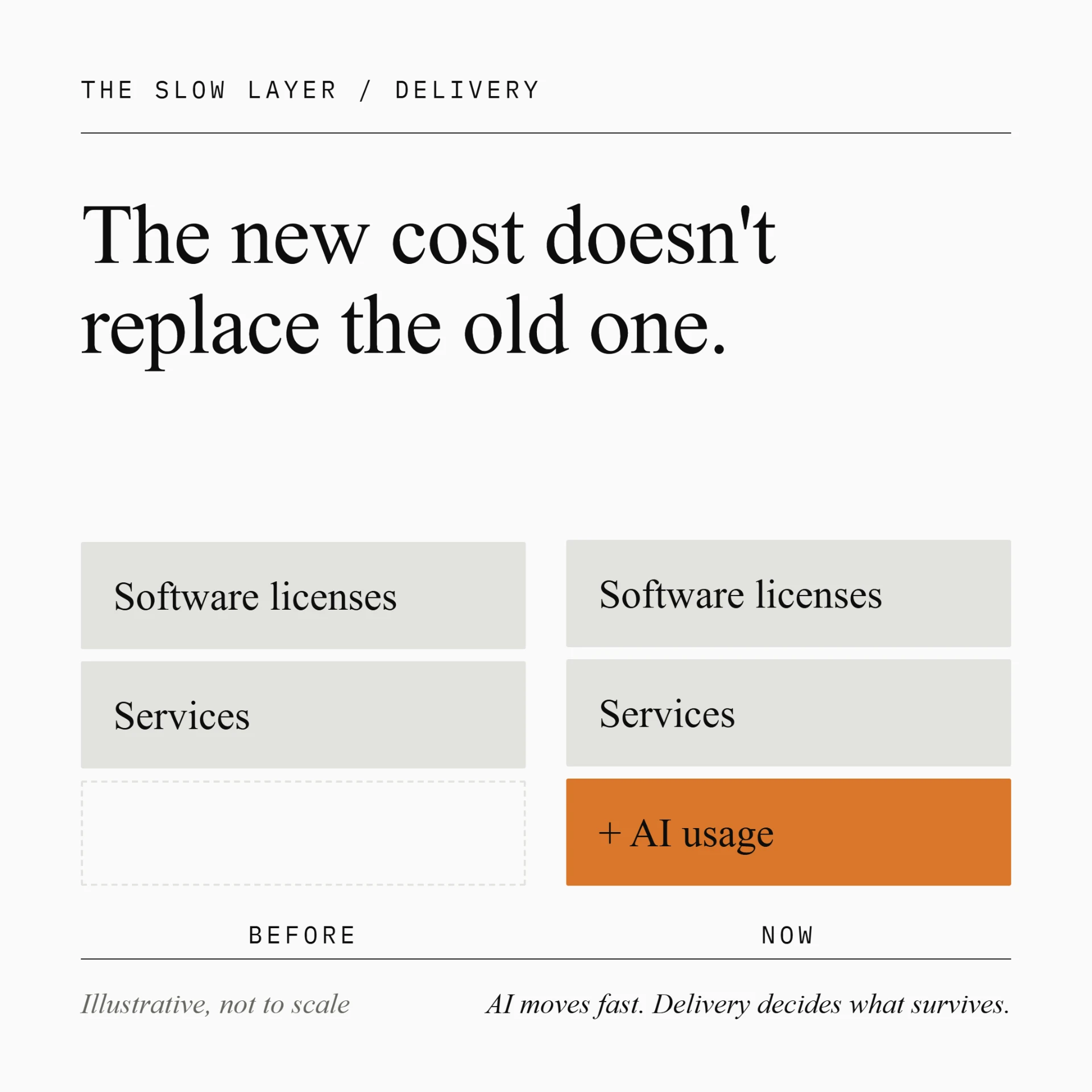
Several conversations at conferences this fall followed the same pattern. A delivery or IT leader walks me through the budget: software licenses renewing at higher prices, services costs that haven't come down, and now a new line for AI usage.
Little else has disappeared to make room for it.
Zylo's 2026 SaaS Management Index shows a similar picture. Average SaaS spending rose 8% year over year while application counts stayed flat at 305. Companies aren't necessarily buying more software. They're paying more for what they already have.
History offers a parallel
Factories began adopting electricity in the late 1800s. Many simply swapped the central steam engine for an electric motor and kept the belts, shafts, and layout built around the old power source. The gains were limited.
The larger gains came when factories reorganized around smaller motors and a different flow of work. Manufacturing productivity accelerated in the 1920s.
Economic historian Paul David studied this transition. His point wasn't just that electricity took decades to pay off. The technology became far more valuable once factories changed how they operated.
AI faces the same problem
Adding AI to an existing process can speed up an individual task. But if the approvals, handoffs, staffing assumptions, and service contracts stay the same, the new cost is added and little of the old cost goes away.
A task that takes ten minutes instead of an hour is useful. But if the work still waits three days for approval, the customer may notice little difference.
AI investments don't all have to cut costs. Better quality, more capacity, and faster delivery all count. But the benefit has to show up somewhere beyond the AI usage report.
Before approving another AI line item, I'd ask:
What work will we stop doing, do differently, or be able to do more of because of it?
Sources
- Zylo, 2026 SaaS Management Index zylo.com/2026-saas-management-index
- Paul A. David, "The Dynamo and the Computer" (1990) gwern.net/doc/economics/automation/1990-david.pdf
From the same thread