Reporting · Governance
The PM Role, Rewritten
Verification runs at the speed of delivery, and judgment is worth more because producing the work keeps getting cheaper.
Shikhar Agarwal · September 30, 2026 · 2 min read
Most of the delivery playbooks I've used were built around one limit: people can only build and test so fast.
That limit is loosening. With AI tooling, work that used to fill a sprint can get done in a day.
But the operating model around it has barely moved. We still report status against plans sized for the old pace. We still hold governance reviews on a calendar, and by the time the meeting happens, the review board is often approving something that's already been replaced.
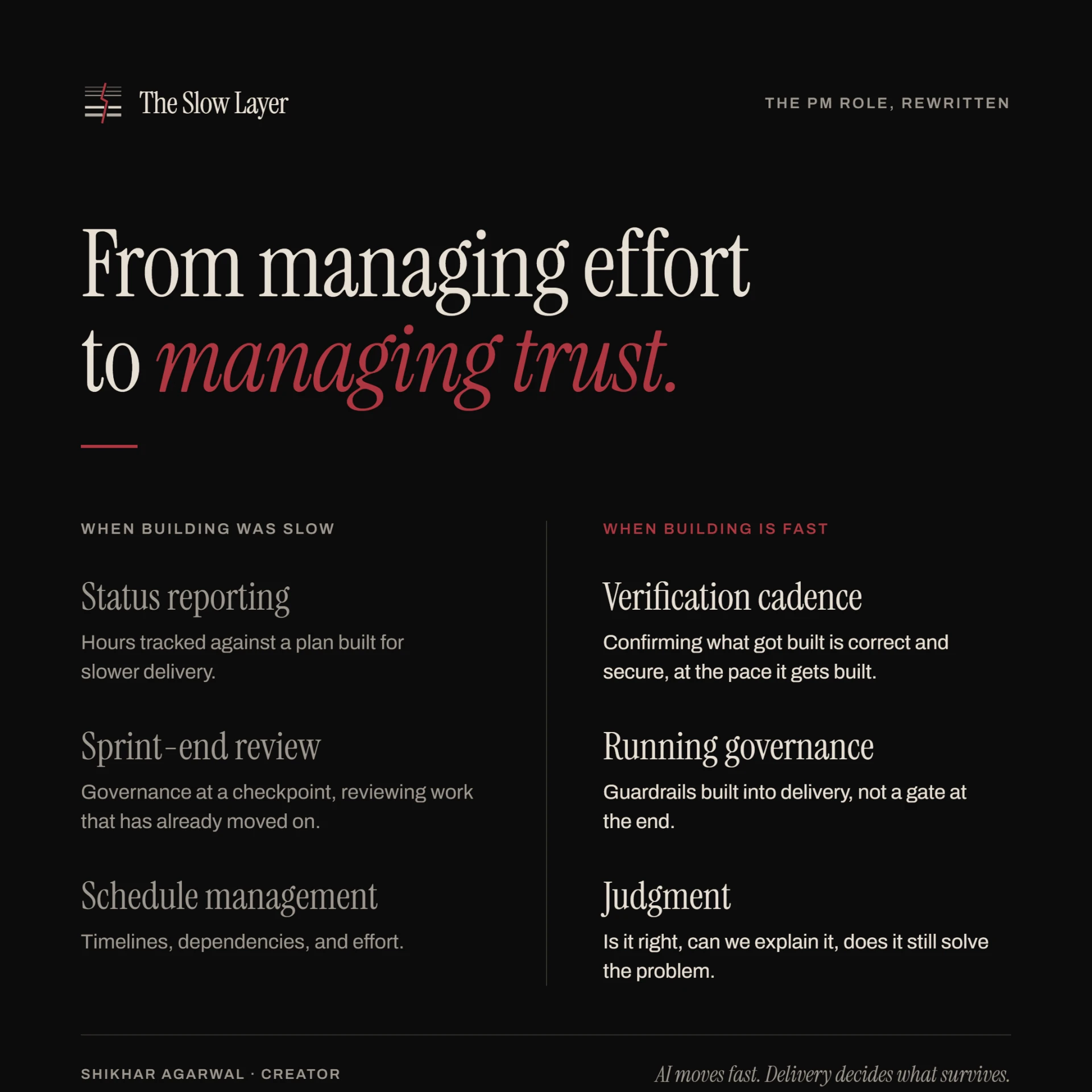
So the hard question is about what got built. Is it correct? Is it secure? Can someone explain what it did? Does it still solve the problem we started with?
I think the PM role is moving from managing effort to managing trust.
That puts verification inside the sprint, running close to the speed of delivery. And it makes PM judgment worth more, because producing the work is getting cheaper.
Two things I'm working through on live programs right now: what a PM signs off on when the build is already done, and what a status report should say when schedule is no longer the main risk.
Both questions are open. If you have an answer, I'd like to hear it.
From the same thread
When the Seller Becomes the Advisor
Between May and July 2026, the companies that build the technology also became the ones paid to advise on it. I think that changes what a second opinion is worth.
Decision Authority, Earned in Steps.
What an agent can decide should depend on what it has demonstrated, how far mistakes can reach, and what can be reversed.